
Concrete Repair & Floor Prep
The part of a garage floor you never see — and the reason good coatings last while cheap ones peel.
Get a Free QuoteAlmost every failed garage coating we hear about failed for the same reason: poor surface prep. Paint-on kits rolled over unground concrete sit on top of the surface instead of bonding to it. Then a hot tire on a summer afternoon pulls them right up.
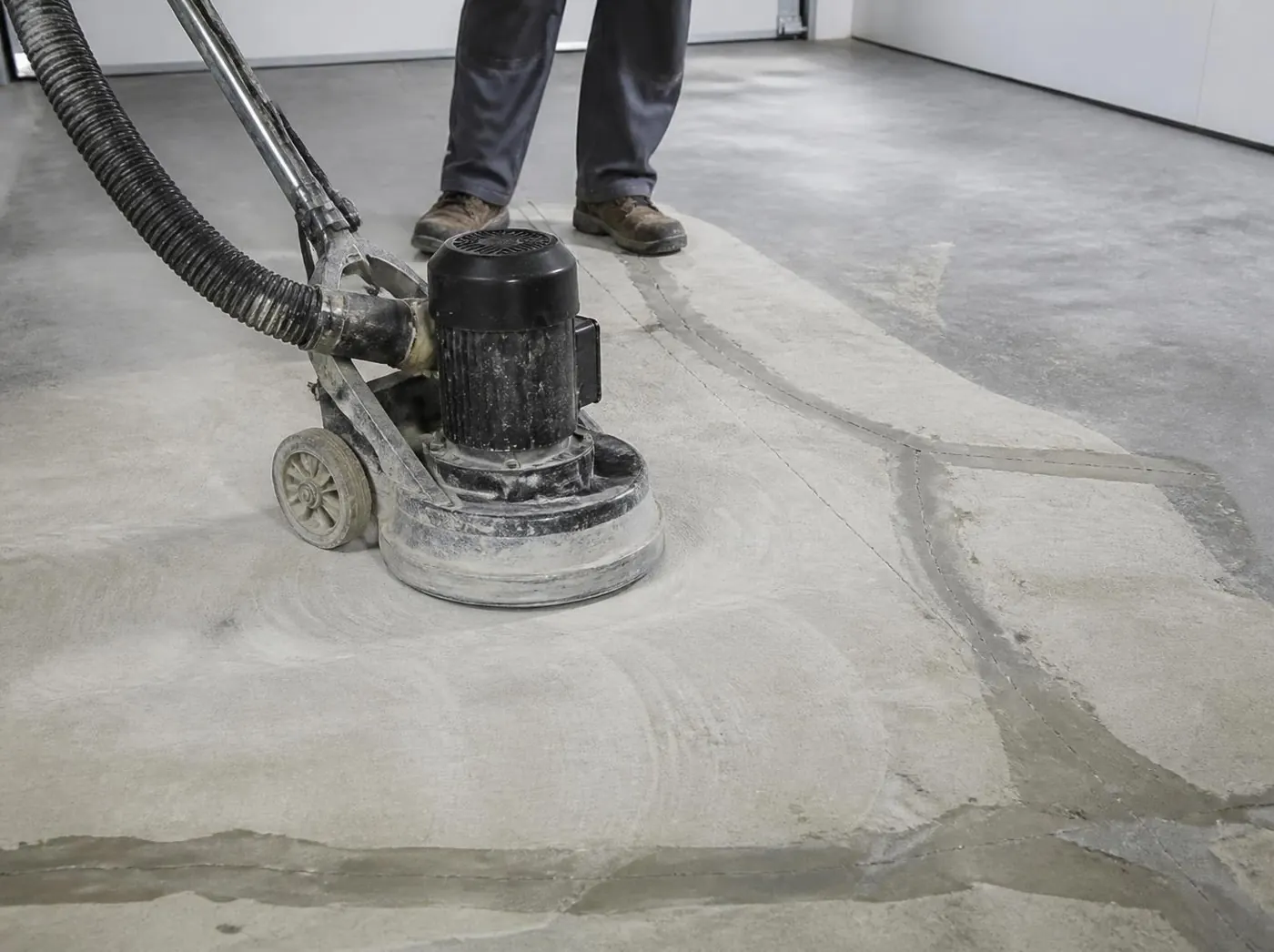
Every floor we quote includes a diamond grind and the repairs your slab actually needs, so the coating locks into sound concrete.
Free QuoteEnter your info below
Diamond grinding vs acid etching
Acid etching (common with DIY kits) cleans the surface but doesn't remove sealers, curing compounds or weak surface paste, and it leaves residue. Diamond grinding mechanically removes the top layer and opens the concrete's pores into a uniform profile the coating can grip. We grind with dust-extraction vacuums, so the garage stays clean.
Repairs we handle before coating
- Cracks: cut out and filled with flexible or rigid repair material
- Spalling and pitting: common near the door where freeze-thaw and deicers attack the surface
- Control joints: filled for a seamless look or honored where movement is expected
- Oil stains: degreased and ground out so they don't stop the bond
- Old coatings: peeling paint or failed epoxy removed down to sound concrete
- Low spots: patched or skim-coated where water pools
Moisture and new concrete
Moisture vapor coming up through a slab can push coatings off from below. We check for it before every job, and on slabs that need it we use a moisture-mitigating primer. New slabs — common across Meridian, Kuna, Star and Nampa subdivisions — generally need about 28 days to cure, and builder curing compounds must be ground off. More in coating a new-construction garage floor.
Winter damage near the door
Snow and slush carrying salt brine and magnesium chloride drip off vehicles all winter and sit on the slab. Repeated freeze-thaw cycles on that wet surface cause scaling and pitting, usually in the first few feet inside the door. Those areas get extra repair before coating. Learn more in garage floors and Idaho winters.
What it typically costs
Standard grinding and minor repairs are included in system pricing. Heavy crack and spall repair, old coating removal or moisture mitigation typically add $1–$3 per sq ft. Typical ranges only — your price comes from a free on-site estimate.
Concrete Repair & Floor Prep FAQ
Do I need to grind my garage floor before epoxy?
Yes. Grinding removes sealers, curing compounds and weak surface paste and creates a profile the coating can bond to. It's the single biggest difference between floors that last and floors that peel. Acid etching alone often isn't enough, especially on newer slabs with curing compounds.
Can you coat over cracked concrete?
Most cracks can be repaired and coated over. We cut and fill them so they don't telegraph through the finish. Cracks that are still moving may reappear as a hairline in the coating, so we'll point those out at the estimate and recommend the right repair.
What does floor prep add to the cost?
Standard grinding and minor crack repair are included in our per-square-foot pricing. Heavy repairs — deep spalling, lots of cracks, oil-soaked areas, old coatings or moisture mitigation — typically add about $1–$3 per sq ft depending on the work.
Related services & areas
Ready for a garage floor that lasts?
Free on-site estimates across Boise and the Treasure Valley.